Emergency Roof Tarping Process: Steps, Costs & What to Know
Key Takeaways:
- Act Within 24 Hours: The emergency roof tarping process must begin within 24 hours. Southwest Georgia’s 70% to 80% humidity triggers mold growth in just 24 to 48 hours.
- Use 20 Mil Poly: Choose a 20 mil heavy-duty polyethylene tarp. Lighter 6 mil options degrade within 2 to 4 weeks under Southwest Georgia’s heat and humidity.
- Sandbags and Battens Required: Nail battens every 12 to 18 inches and place 30 to 40 lb sandbags no more than 3 feet apart. Loose tarps fail after a single 45 mph windstorm.
- Tarping Beats Waiting: A $150 to $1,200 tarp job prevents $3,000 to $10,000+ in water damage remediation costs from a 48-hour delay.
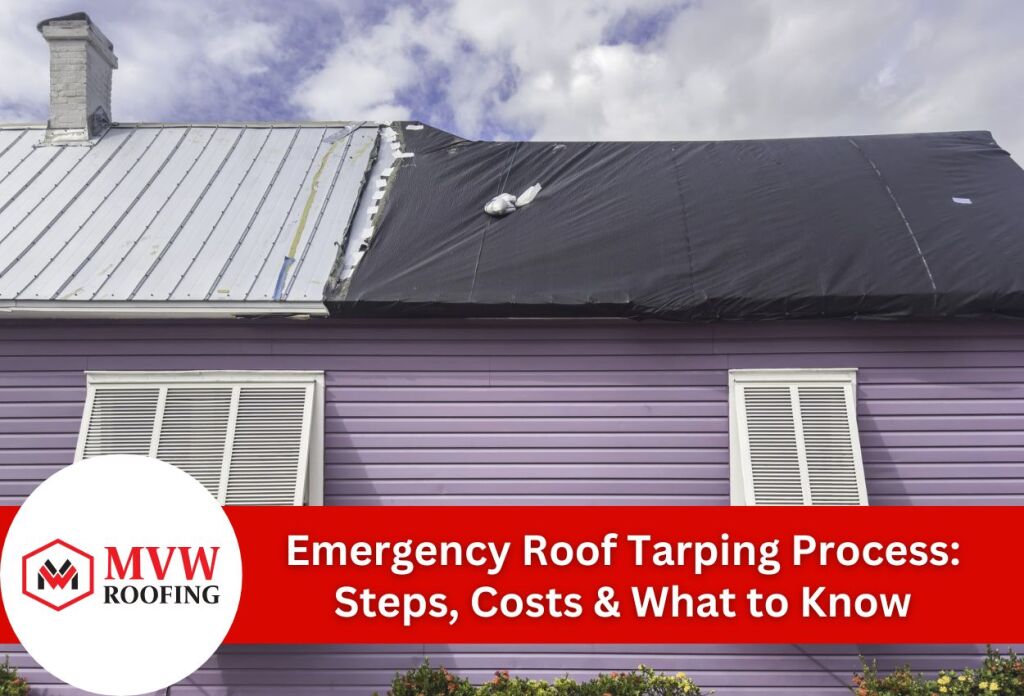
Emergency roof tarping is the process of covering storm-damaged roof sections with heavy-duty waterproof sheeting to stop water from entering a home, and in Southwest Georgia, homeowners typically have 24 hours or less to act before secondary damage drives up repair costs. The region receives 50 to 55 inches of rainfall annually and sees multiple severe storms each year. With humidity levels averaging 70% to 80% year-round, mold can begin growing inside a home within 24 to 48 hours of water intrusion.
A proper tarping job involves securing heavy-duty polyethylene sheeting over the damaged area using lumber battens, nails, and sandbags to hold everything in place through wind and rain. It is not a permanent fix, but it buys important time between storm damage and a full roof repair.
This guide covers the materials needed, the installation, the best timing for tarping in Southwest Georgia, typical costs, and how to decide between a DIY approach and calling a licensed Georgia roofing contractor.
What Materials Do You Need Before Starting Emergency Roof Tarp Installation Steps?
A 10 to 20-mil heavy-duty polyethylene tarp is the right choice for Southwest Georgia homes. Lighter options degrade within 2 to 4 weeks under the region’s high humidity and frequent afternoon thunderstorms from March through October.
| Tarp Type | Thickness | Avg Cost per 100 Sq Ft | Wind Resistance Rating | Expected Lifespan (SW Georgia Humidity) |
|---|---|---|---|---|
| 6 mil polyethylene | 6 mil | $8 to $12 | Up to 30 mph | 2 to 4 weeks |
| 10 mil polyethylene | 10 mil | $15 to $22 | Up to 50 mph | 1 to 3 months |
| 20 mil heavy-duty polyethylene | 20 mil | $28 to $40 | Up to 75 mph | 3 to 6 months |
| Canvas | 18 to 24 oz | $45 to $70 | Up to 60 mph | 2 to 4 months |
Beyond the tarp itself, a typical 1,500 square foot residential roof, the most common size in Southwest Georgia, requires roughly 8 to 10 pieces of 2×4 lumber cut to 8-foot lengths as battens, approximately 1.5 pounds of roofing nails, and 4 to 6 sandbags placed along exposed tarp edges. Canvas holds up reasonably well but absorbs moisture over time, making it a poor long-term choice in this climate. A 20 mil heavy-duty polyethylene tarp offers the best balance of wind resistance and humidity durability for the region’s severe weather season.
How Do You Tarp a Roof After Storm Damage?
Tarping a damaged roof correctly takes 6 to 8 steps and should be completed within 24 hours of storm damage to prevent water intrusion and mold growth. Temporary roof tarp securing methods that skip even one of these steps often fail within the first rainstorm.
- Stabilize your ladder before climbing: Southwest Georgia’s red clay soil turns slick after rain. Place a wide board or plywood sheet under each ladder foot to prevent sinking or sliding. This is a region-specific hazard that causes falls even on low-slope roofs.
- Clear debris from the damaged area: Remove all branches, leaves, and loose material before placing the tarp. Dense pine and oak tree cover in Southwest Georgia means debris volume is typically higher than in other regions. Budget 20 to 30 minutes just for clearing.
- Remove loose or lifted shingles: Pull off any shingles that are cracked, buckled, or detached within the damaged zone. Loose material under a tarp creates air pockets that allow wind to lift the tarp off during the next storm.
- Size and position the tarp correctly: The tarp must extend at least 4 feet over the ridge line and overlap all damaged sections by a minimum of 3 to 4 feet on every side. A tarp that is too small is one of the most common DIY mistakes.
- Nail battens across the tarp edges: Lay 2×4 lumber pieces flat over the tarp edges and nail them through the tarp into the roof deck. Space nails every 12 to 18 inches along each batten to distribute weight evenly and prevent tearing at fastener points.
- Secure the ridge edge with a wrapped batten: Fold the top edge of the tarp over a 2×4, staple it in place, then nail the wrapped batten to the ridge. This stops wind from catching the top edge and peeling the tarp back.
- Place sandbags along all exposed edges: Each sandbag should weigh a minimum of 30 to 40 lbs and be placed no more than 3 feet apart along tarp edges. Southwest Georgia’s flat terrain gives straight-line winds almost no natural barrier, so sandbag weight and spacing matter more here than in hillier regions.
- Check all fastening points and recheck after 24 hours: Inspect batten nails, sandbag positions, and tarp overlap after the first rain or wind storms. Tarp edges that shift even 6 inches can expose the damaged area again.
Following these steps in order reduces the risk of tarp failure during Southwest Georgia’s frequent spring and summer storms. If roof access feels unsafe at any point, especially after heavy rain on clay soil, call a licensed roofing contractor rather than risk a fall.
How Long Does Emergency Roof Tarping Take and How Long Can a Tarp Stay on Your Roof?
A professional crew averages 1 to 2 hours to tarp a standard 1,500 square foot roof, while a DIY homeowner typically takes 3 to 5 hours for the same job scale. That time gap matters in Southwest Georgia, where afternoon thunderstorms can roll in with little warning. In this region’s humid climate, a tarp left in place beyond 60 to 90 days without proper ventilation underneath raises the risk of mold growth and wood rot. Permanent repairs should be scheduled well within that window.
| Securing Method | Summer UV & Humidity Exposure | Wind Storm Above 45 mph |
|---|---|---|
| Properly secured with battens and sandbags | 3 to 6 months before degradation | Holds through 2 to 4 storms |
| Loosely weighted only (no battens) | 4 to 6 weeks before a significant breakdown | Fails within 1 storm |
A loosely weighted tarp in Southwest Georgia’s summer heat rarely survives past 6 weeks and may shift or peel back after a single storm above 45 mph. Contact MVW Roofing quickly after any storm to schedule a permanent roof repair before the 60-day mold risk window closes.
Should You DIY the Emergency Roof Tarping Process or Hire a Licensed Georgia Roofing Contractor?
Georgia law requires roofing contractors to hold a state residential basic license for projects over $2,500, and most Southwest Georgia counties require a building permit for temporary tarping on structures over 100 square feet. Skipping licensed installation can put your insurance claim at risk before it even starts.
DIY May Be an Option If All of These Apply
- Roof pitch is 4:12 or lower: Slopes above 4:12 become difficult to work on safely without professional equipment, especially on wet or debris-covered surfaces.
- Damage is limited to one section under 100 square feet: Small, clearly visible damage with no structural compromise is the most manageable job scale for a homeowner.
- The home is one story: Single-story access reduces fall risk and ladder setup complexity on Southwest Georgia’s slippery red clay soil.
- At least two adults are available to assist: One person should always remain on the ground. Handling the tarp on a roof without a second set of hands increases the risk of losing footing or dropping materials.
Call a Licensed Contractor If Any of These Apply
- Visible structural damage or sagging deck: A compromised roof deck can fail under added weight, making any foot traffic dangerous.
- Roof pitch exceeds 4:12: Steeper slopes require professional anchor systems that most homeowners do not have on hand.
- The home is two or more stories: Working at height above 15 feet without harness equipment and a trained crew is a leading cause of serious fall injuries.
- Damaged area exceeds 100 square feet: Projects at this threshold trigger local permit requirements in most Southwest Georgia counties, making licensed installation the only covered path for insurance purposes.
Rural Southwest Georgia properties can face emergency crew response times of 30 to 60+ minutes, which may factor into a DIY decision for minor, clearly visible damage on a low-slope one-story home. For anything beyond small, accessible damage, 24/7 emergency tarping services from a licensed contractor like MVW Roofing protect both your home and your insurance claim.
What Does Emergency Roof Tarping Cost After Storm Damage, and Does Insurance Cover It?
Emergency roof tarping costs range from $150 to $1,200, depending on the size of the damaged area, and most standard homeowners’ insurance policies cover that cost as part of the initial storm damage claim. The table below breaks down typical roof tarping costs after storm damage in the Southwest Georgia contractor market.
| Tarping Option | Scale of the Damage | Low Cost | High Cost |
|---|---|---|---|
| DIY materials only | Any size | $50 | $150 |
| Professional tarping | Under 200 sq ft | $150 | $400 |
| Professional tarping | 200 to 500 sq ft | $400 | $800 |
| Professional tarping | 500+ sq ft | $800 | $1,200 |
Document all receipts and photos within the first 24 hours of storm damage. Failing to tarp quickly can give insurers grounds to deny secondary water damage claims, and that secondary damage is far more expensive. A 48-hour delay in tarping can turn a $150 to $1,200 tarping job into $3,000 to $10,000+ in water damage remediation costs. Tarping is one of the clearest ROI-positive steps a homeowner can take after a storm.
Ready to Protect Your Home? Contact a Southwest Georgia Emergency Roofing Team Today
Mold can begin growing within 24 to 48 hours in Southwest Georgia’s humidity, which means every hour without a secured tarp raises your repair costs. MVW Roofing provides 24/7 emergency roof storm damage services across Southwest Georgia, with crews ready to respond the same day storm damage occurs.
Request a same-day inspection.
Not ready to schedule? Learn more about emergency roof tarping services.